
How to style a period home with modern designer furniture without losing its character
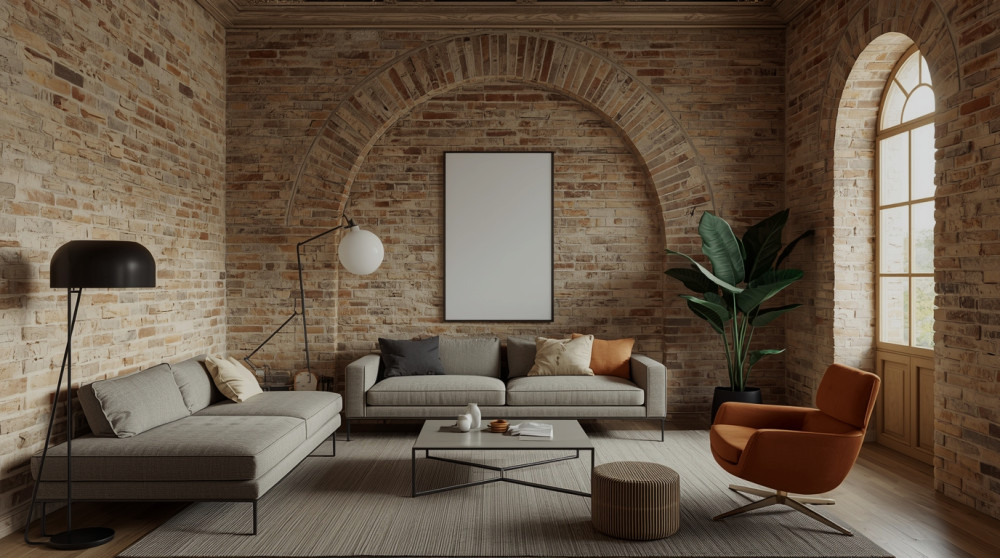
However, preservation for its own sake is not the answer. A house that has been frozen rather than lived in has its own kind of problem. When the question becomes what kind of furniture can live comfortably in a renovated historic interior, brands like B&B Italia become relevant for a simple reason: their pieces are not designed to imitate the past, but to sit confidently beside it.
Start With What is Original
Before considering sofas, lighting, or dining tables, it is helpful to understand which features of the house actually deserve protection. In many older homes, original features such as mouldings, fireplaces, timber beams, stone floors, window proportions, and internal doors form part of the building's identity. Later additions are often another matter entirely. Poorly fitted suspended ceilings from the 1980s, awkward partition walls, cheap laminate, and unsympathetic bathroom refurbishments may have little to do with the home's original character.
This distinction is important because it affects how the interior should be approached. If the architecture already has presence, the furniture does not need to overperform. In a room with good proportions and strong original detail, fewer pieces are often better. The space already has a point of view. The role of furniture is to support daily life while allowing the room itself to remain visible.
Choose modern furniture over reproduction pieces
One of the most common mistakes in period homes is assuming that the furniture should match the style of the building. In reality, reproduction furniture can make interiors feel strangely flat. Modern furniture tends to work better if it has clear shapes, strong proportions, and materials that age well. It does not need to match the age of the house. It just needs to have enough presence to fit in comfortably.
A sofa like the Saba Ananta, for example, works well thanks to its calm profile and low, generous proportions. It looks settled rather than fussy. In a room with original cornicing or old floorboards, its simplicity allows the architecture to remain legible. A piece such as the Poltrona Frau Chester One, on the other hand, brings a different quality: leather can develop the kind of depth and softness that suits an old interior far better than synthetic finishes or overly decorative surfaces, especially when it wears in well. The Cassina LC2, with its exposed metal frame and structured form, offers another useful example. It makes no attempt to "match" a historic setting, yet its clarity is exactly what enables it to coexist with one. What these pieces have in common is not a shared style, but a sense of conviction. They do not try to borrow charm from the building. They bring their own.
Let the awkwardness of the house guide the layout
Older buildings rarely behave like new builds. Rooms may be narrower than expected, walls may be uneven, fireplaces may obstruct the obvious furniture layout, and windows may be positioned too high or low for standard placement. While it is tempting to see these features as inconveniences, they are usually what give the house its character.
Rather than forcing a room into a layout that would suit a modern flat, it makes more sense to work with its irregularities. For example, a large sofa may need to be placed away from the wall rather than against it. A reading chair could be placed in an alcove that was never intended for one. Similarly, a dining table may look better if it is positioned slightly off-centre, allowing a fireplace or old doorway to remain part of the composition.
Period interiors become memorable for this reason. Not because they are perfectly symmetrical or heavily styled, but because they feel shaped by the building rather than imposed on top of it.
Choose fewer pieces, but better ones
Historic interiors are rarely improved by too much furniture. Old houses often have more visual information built into them already: panelled doors, ornate plasterwork, aged timber, exposed masonry, deep reveals, textured walls. Filling them with too many objects can make them feel heavy very quickly.
A better approach is to choose a few strong pieces and give them room to breathe. A substantial sofa, a solid dining table, a pair of well-scaled armchairs, considered lighting, and a small number of consistent materials throughout the house often achieve more than a fuller, more decorative scheme. This is particularly pertinent in British homes, where rooms tend to be more compartmentalised than in contemporary open-plan spaces.
Restraint makes the contrast between old and new feel more deliberate. It gives the architecture a sense of space and allows the furniture to appear chosen rather than accumulated.
New ashby Jobs Section Launched!!
Vacancies updated hourly!!
Click here: ashby jobs
Share: